 فارسی
فارسی
Sayings
From Little India to Gracious India For: My Teacher and Guide Professor Uttam Bhoite
اردیبهشت
From Little India to Gracious India For: My Teacher and Guide Professor Uttam Bhoite, By: Fariborz Hamzeh’ee
From Little India to Gracious India
For:
My Teacher and Guide Professor Uttam Bhoite
By: Fariborz Hamzeh’ee
I love India. It is said that for love no reason is needed. In this case still enough obvious reasons also exist. Therefore, when this time I finally could visit India after perhaps 20 years, I somehow was afraid to become disappointed and feel to be stranger due to the new development. But soon after the day of my arrival, I had the same kind feelings which I had discovered in the beginning of my collage time.
If it is necessary to put this feeling in words, I can say some forms of emotions like “trust” and “peace” might be near. Still much had been changed in Poona in favour of those who propagate capitalist technology. Even if also India might also surrender capitalism, I felt that still the air has not given up its deep spirituality.
I went to see Wadia College in Poona Camp. I wanted to see how it is looking now. I was almost the same, despite the giant metro bridge covering the road. But Café Delight and beautiful Café Bund have both disappeared. I never forget the beautiful smile of the owner of Café Bund. Rumi, the owner of this place; was an Irani Zoroastrian who knew some Persian. He always had a big beautiful smile painting his face. He was often asking me not to be so grimy and do smile.
From Little India to Gracious India
I remember that feeling of happiness when for the first time I cycled from Café Bund through Boat Club road to my room in Dhole Patel road. Nothing I needed to be happy, more than a bicycle and a completely bare room; which I shared with two other Iranian students. It was so beautiful to cycle and watch wonderful flowers of the dear “Gulmohar” trees that were covering the Boat Club road.
Now I saw again that this beautiful road with its big tree has not changed much. But in Dhole Patel road the changes were so much that I did not find the house we lived in. I looked for Nandu, the son of our house lord, who was also studying in Wadia Collage. He was the one whom first I asked to teach me Hindi words. I went to Bund Garden to find my friend Salim, who had a Pan shop there. The kiosk was not there but I found his grown up son. Salim was at home. I could call him with the smart phone of his son.
From Little India to Gracious India For: My Teacher and Guide Professor Uttam Bhoite
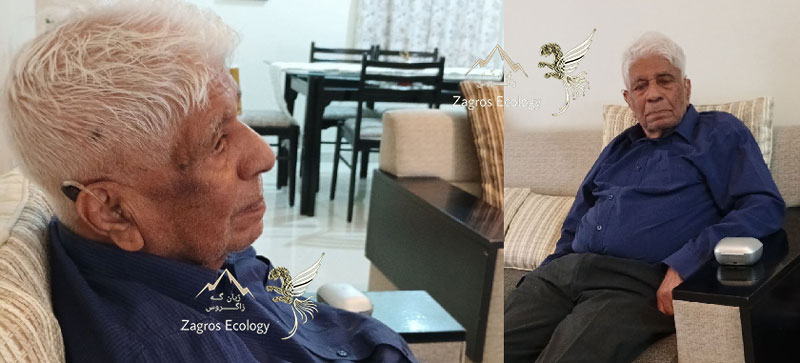
But the top of excitement of this journey was a visit of my Professor and the guide for MA and Ph.D. dissertations, Prof. Uttam Bhoite. I searched for him first in our sociology department building in “Poona University” which is now renamed as Savitribai Phule Pune University. Savitribai Phule is said to have been a poet and the first known female teacher of modern India.
In our time Sociology Department was a galaxy of great scholars. Prof. Y. B. Damle, Prof. D. N. Dhanagare, Prof. R.N. Pundlik and Prof. Uttam Bhoite etc..
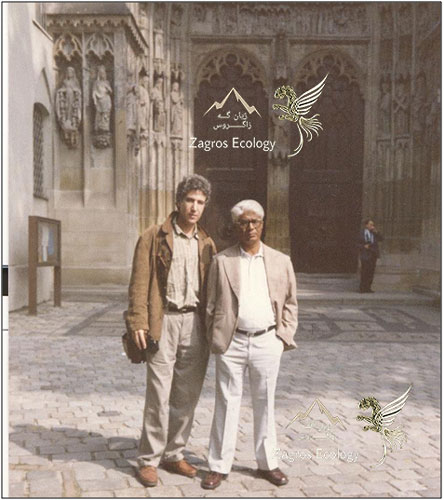
For me Prof. Bhoite had something more than being a professor: A wise man with very beautiful grey hair and a deep voice. Prof. Bhoite is a symbol of Maharashtra or India in all their best attributes: Kind, spiritual, calm, quiet kind and helping. Therefore, I decided to do my master dissertation under his guidance.
From Little India to Gracious India For: My Teacher and Guide Professor Uttam Bhoite
It was a theoretical and empirical research about the leisure activity of Poona university students. Then I decided to do my PhD with him. It took a long time, at least five years. My research was about millenarian social movements in Iran. At that time there existed no book in this respect in India. I did most of library research in Germany, where I was able to read most of existing books in European languages well as many books in Persian.
I remember those hot summers of Poona, sitting with my patient guide and get through my hand written notes. After that I used to sit with a typist, so that there would be no typing mistakes. There was still no computer and Prof. Bhoite went through each sentence with incredible patience. It was a challenging beautiful time.
I was at that time staying in university hostel. The worst time was when I finished my cigarettes at night as there was no shop open around.
From Little India to Gracious India
Finally, the challenging revising and typing of some hundred pages of dissertation came to an end. Very known sociologists had been chosen as examiners: Prof. K. L. Sharma, Chairman of the Center of Study of Social Science (Jawaharlal Nehru University) and Prof. B. S. Baviskar, Head of Department of Sociology (University of Delhi). It was naturally an honor to have such known Indian sociologists as examiners. But the cost of this honor was that it took more than one year to receive the reports.
My research was a cohesive study of millenarian social movements in historical Iran. It was found that almost all of these large number of movements, ideologically were revivalist. At that time, I had the opportunity to make use of European libraries. Therefore, also a large number of very old books were checked and all the relevant parts I had to write down per hand. Using such a large number of sources had even impressed Prof. Bawiskar. He had wondered how we did not get lost in so sea of sources.
This research made it evident that almost all these movements were longing for reviving the ancient religious culture of Mazdaism. Interestingly this culture is related to ancient Indo-Iranian and Hindu ethic and religious ideas.
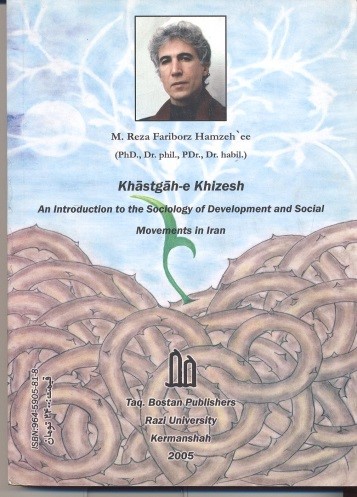
Different versions of my dissertation were published in Germany and Iran.
Land of Revolutions
In my dissertation one capital was devoted to description of a religious community in my own native region. This region is culturally and historically related to Mesopotamia. In nineteenth century a British scholar called Henry Rawlinson, called this region “Little India”; because of the survival of a variety ancient cultures and philosophy. Rawlinson was able to read the known relief of Bistun from the time of Dariush the Achaemenes.

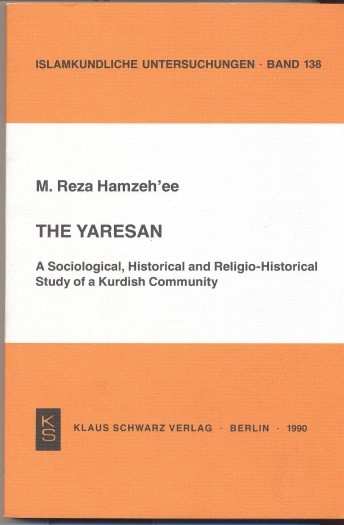
The Yaresan By M. Reza Fariborz Hamzeh’ee
At that time this community was not known as it is today. While waiting for the reports from Delhi, I continued to work about this community. It was finally developed into another dissertation which was submitted to the University of Augsburg in Germany (Prof. Dr. Dr. Peter Waldmann). This dissertation was examined by two other Bavarian universities namely University of Erlangen-Nûrnberg (Prof. Dr. Hans-Chrisroph Schmitt) and University of Bamberg (Prof. Dr. Bert Fragner). As the fist cohensive study of this which I first introduced its undeclared name “The Yaresan” was published in Berlin in 1990.
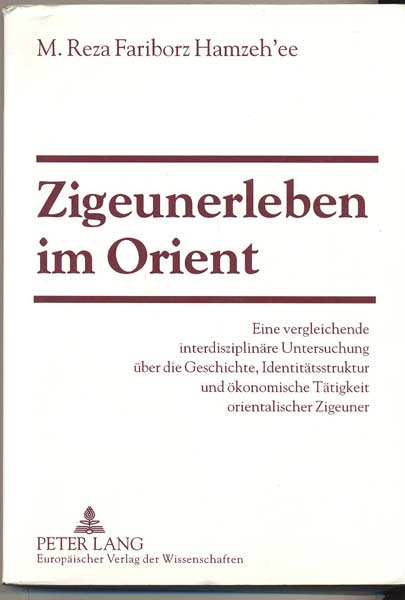
As I had spent my youth in India, my feeling for it even increased; while living and working in Germany. I visited Pune as many times as I could. In one of my visits when I also met Prof. Bhoite, I collected data about a Persian speaking community in Shivajinagar. This data I developed for the highest German academic degree called “Habilitation”= (PD. Dr. habil.). It was submitted to the University of Osnabrück and was examined by four other German universities (FU Berlin, University of Leipzig, University of Weingarten).
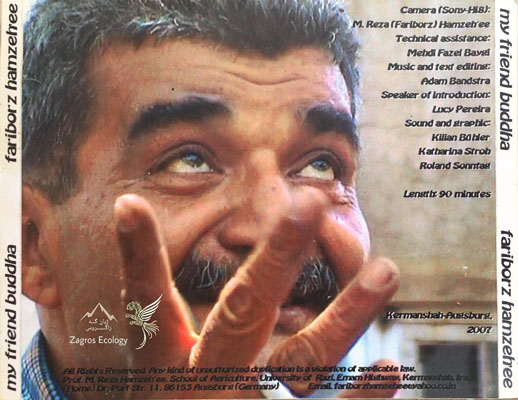
In addition to all these, about twenty years ago I made a documentary film about the followers of Dr. Ambedkar: The Neo-Buddhist community of Pune. We already had a paper about such underprivileged groups in Poona University. This film called “My Friend Buddha” was inaugurated on the University of Augsburg in Germany.
Mein lieber Buddha-Freund von fariborz hamzehree Kermanshah-Augsburg, 2007
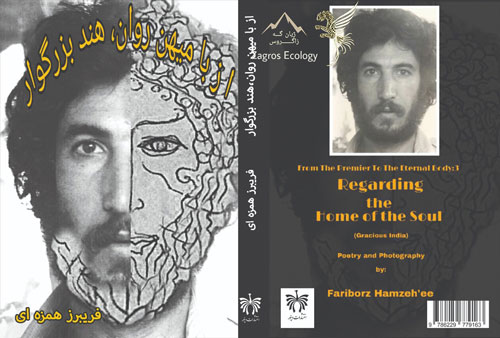
Moreover, recently I published an anthology (called: Regarding the Gracious India) written during my study time at Poona University. In the beginning after my arrival in Poona, I was interested in cinema and photography. But I was told that Poona’s known Film Institute does not admit foreign students. But I continued photography everywhere possible. Several of the photos made by me in those years are published in the above mentioned anthology.
From The Premier To The Eternal Ecdy: 1 Regarding the Home of the Soul (Gracious India) Poetry and Photography by: Fariborz Hamzeh’ee
Sometimes I wonder whether my emotional connection is only due to my long residence in India. No doubt that I have spent important part of my life in this culture. But who knows what all others factors might have played role?! I have been repeatedly asked why I went to India and not to the West?! But I am so glad to have gone there and not to e.g. the USA or at least to Australia. India made me what I am and how I now think. Moreover, Indian society is for me the best and greatest university in the whole world. I know a German philosopher who by considering the great damages of modernity to the world, believes that any light of hope still might lay beneath Indian and Oriental cultures.
Unfortunately, the deep and old relation between India and Persia and Mesopotamia, is not enough known to many people. In addition to all other relations, at least since one thousand years, India has given shelter to Persian poets, painters, musicians, architects philosophers etc.
Among descendants of all those who came to India, I also came to contact with Parsi and Irani Zoroastrians. Since that time these community has been one of the fields of my study. Because of my deep persuasion and feelings for Indian people and culture, all the last years since I left India, I have been a voluntary ambassador of Indian culture. The existence of all these groups about which I have been working is the most positive proof for togetherness and creative cooperation in variation and diversity.
My Teacher and Guide Professor Uttam Bhoite By: Fariborz Hamzeh’ee
All the Indian and Sufi mystics have been pledging for harmony with all living beings. Prof. Bhiote is carrying such a mystical harmony in him but quietly. Such was also Sai Baba of Shirdi whom he liked. I still repeat some of his words. Therefore, as a matter of fact is normal that already Pune has become my second home town. After all, even objectively I have also come to know this great culture from within.
Prof. Uttam Bhoite is not only an important person in my life. For me he is one of the faces of Indian culture. Considering all these, it becomes a little clear why the meeting with him was so important for me. I had brought some of my published books and original degrees to show him. It is clear that as the first teacher and guide, any of my later academic achievements had also to do with him. I wanted to make him happy. But instead, as a kind face of gracious India, he surprised me in his wise and quiet manner; by giving me the honor of receiving a “Pashmina” from his hands. Bahut Dhanyawad Gurujee!
This post is available:

